No Product Added

By : Shah Electronics
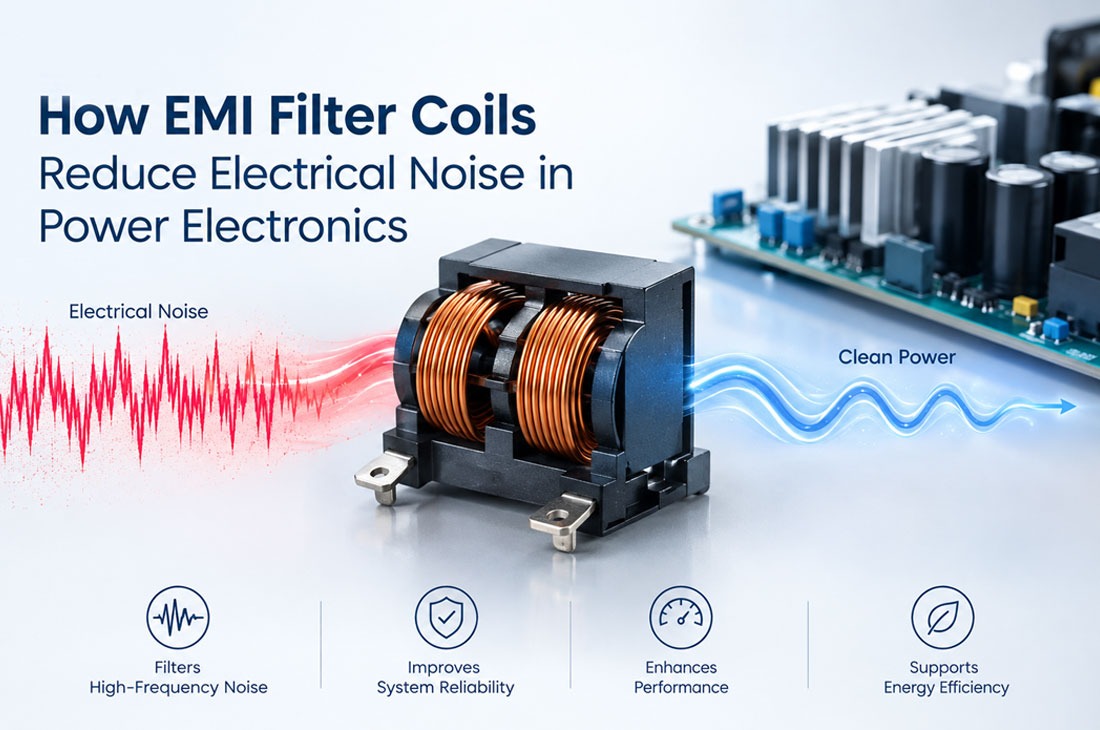
If you've ever dealt with a power supply that interferes with nearby equipment, causes flickering displays, or fails EMC compliance testing, chances are electromagnetic interference (EMI) is the culprit. It's one of those hidden problems that doesn't show up until a product is tested or worse, until it's already out in the field. The good news is that a well-designed EMI filter coil can solve most of these issues before they ever become a headache.
Let's talk about what EMI filter coils actually do, why they matter so much in modern power electronics, and how they keep systems like SMPS units, EV chargers, and solar inverters running cleanly and reliably.
What Is an EMI Filter Coil?
An EMI filter coil, sometimes called an EMI inductor or noise filter coil, is a wound component usually built around a ferrite or iron-based core that's placed in a circuit to block unwanted high-frequency noise while allowing the intended power signal to pass through smoothly.
Think of it like a bouncer at a club: it lets the "right" signal in and keeps the "troublemakers" (noise, spikes, and interference) out. This is especially important in high-frequency electronics, where switching components like MOSFETs and IGBTs generate rapid voltage and current transitions and those transitions create noise that can travel back into the power line or radiate outward, disturbing other devices.
Why Electrical Noise Is a Bigger Problem Than It Looks
Every switching power supply, inverter, or charger works by rapidly turning current on and off. That switching action is efficient, but it's also noisy electrically speaking. Left unfiltered, this noise can:
This is where an EMI filter steps in, acting as the first line of defines against conducted noise before it spreads through the rest of the circuit or back into the power grid.
How EMI Suppression Coils Actually Work
At a basic level, an EMI suppression coil works by using inductive reactance to oppose sudden changes in current. Since high-frequency noise involves rapid current fluctuations, the coil naturally resists it far more than it resists the smooth, steady flow of the intended power signal.
There are generally two types of noise that these coils are designed to tackle:
1. Common-Mode Noise – Noise that flows in the same direction on both the line and neutral conductors, often caused by capacitive coupling to ground.
2. Differential-Mode Noise – Noise that flows in opposite directions between the line and neutral, typically generated directly by the switching action of the power circuit.
A properly engineered EMI filter coil is designed to target one or both of these noise types, depending on the application, ensuring the system stays within EMC limits without affecting overall power efficiency.
Where EMI Filter Coils Are Used
SMPS (Switch Mode Power Supplies)
Switch mode power supplies are everywhere from chargers to industrial equipment and they're also one of the biggest sources of conducted EMI. Installing a noise filter coil at the input stage helps keep switching noise from feeding back into the mains supply, protecting both the device and everything else connected to that power line. Shah Electronics' range of Switch Mode Power Supplies applications relies heavily on this kind of filtering to maintain clean, stable output.
EV Chargers
EV chargers combine high power levels with fast switching frequencies, which makes them particularly prone to generating noise. An EMI filter coil placed in the charger's input or output stage helps suppress this interference, protecting the vehicle's onboard electronics and helping the charger meet automotive EMC standards. This is especially critical as E Vehicle and New Energy Vehicles applications continue to scale up in power and complexity.
Solar Inverters
Solar inverters convert DC power from panels into usable AC power, and this conversion process is another major noise generator. Without proper filtering, that noise can travel back into the grid or interfere with nearby monitoring equipment. EMI filter coils used in Solar Inverter systems help keep the output clean and grid-compliant.
Other High-Frequency Electronic Systems
Beyond these three major categories, EMI suppression is critical in a wide range of systems, including IoT Device EMI Filters, Power Line Filter Circuits, and general-purpose Noise Suppression Devices used across telecom, industrial automation, and consumer electronics.
Why EMI Filtering Improves Long-Term Reliability
It's easy to think of EMI filtering as just a "compliance checkbox," but it does much more than help a product pass testing. By suppressing voltage spikes and high-frequency noise:
In short, a good EMI filter coil isn't just about passing a test it's about building a more dependable product from the inside out.
Choosing the Right EMI Filter Coil
Not every application needs the same type of filtering. Factors like operating frequency, current rating, core material, and whether you need common-mode or differential-mode suppression all play a role in selecting the right component. This is why working with an experienced manufacturer matters the right coil design can make the difference between a product that barely passes EMC testing and one that performs reliably for years.
At Shah Electronics, our EMI Line Filter and EMI Filter Inductor ranges are engineered to deliver consistent noise suppression across a variety of power electronics applications, backed by quality-controlled manufacturing processes. You can explore our full line-up of coils on our Line Filter Coils Series page.
Final Thoughts
As power electronics continue to push toward higher switching frequencies and greater power densities think EV chargers, solar inverters, and compact SMPS units the role of the EMI filter coil becomes more important, not less. It's a small component with an outsized impact on system reliability, regulatory compliance, and overall product quality.
If your design is struggling with noise issues, EMC failures, or unexplained interference, it may be time to take a closer look at your filtering stage.
FAQs
Q1. What is the difference between an EMI filter coil and a regular inductor? While both are wound components, an EMI filter coil is specifically engineered to suppress high-frequency noise while allowing the main power signal to pass efficiently, whereas a general inductor may be optimized purely for energy storage or current smoothing.
Q2. Do all power electronics need EMI filtering? Most switching-based systems including SMPS units, inverters, and chargers generate some level of conducted noise, so EMI filtering is typically necessary to meet safety and compliance standards, and to protect nearby equipment.
Q3. Can an EMI filter coil improve power efficiency? Indirectly, yes. By reducing noise-related stress on components and stabilizing the power conversion process, proper EMI suppression can reduce losses and improve the overall reliability of the system.
Q4. Are EMI filter coils used in solar inverters? Yes. Solar inverters generate significant switching noise during DC-to-AC conversion, and EMI filter coils help keep that noise from affecting the grid or nearby monitoring systems.
Q5. Does Shah Electronics manufacture custom EMI filter coils? Yes. Shah Electronics designs and manufactures a range of EMI line filters and filter inductors tailored to different power and frequency requirements across SMPS, EV, solar, and industrial applications.
© 2025. Shah Electronics. All Rights Reserved. Terms of Use Privacy Policy Cookie Policy
Terms of Use
Privacy Policy
Cookie Policy
© 2025. Shah Electronics. All Rights Reserved.
Powered by WEBMANTRA